
What My Local Farmers Market Showed Me About Belonging
The Cobblestone Farmers Market has been a mainstay in the Winston-Salem community for over 15 years. Its roots as the city's first producer-only market focused on organic and sustainably grown food began inside a coffee shop. In 2012, it moved just down the street from historic Old Salem and Salem College, a school I am proud to call my own, and officially became the Cobblestone Farmers Market.
I didn't grow up in Winston-Salem, but moved here for college, spending some of my most memorable years here as a student at Salem College and Wake Forest University. Life took me elsewhere after graduation, but when I moved back here a few years ago, places like Cobblestone are what helped make this city feel like home again.
We have very few places like it left. People arrive with no agenda beyond groceries, they linger, they run into someone they know, and they end up talking with a stranger about peaches. And for as long as I can remember, I have loved going there to shop local vendors, grab the freshest locally grown produce, and connect with friends.
So when we were looking for an opportunity to set up a space and share more about what we are doing at The Cost of Loneliness Project, I could not think of a better setting.
We set up an interactive gathering space there on two weekends this summer.
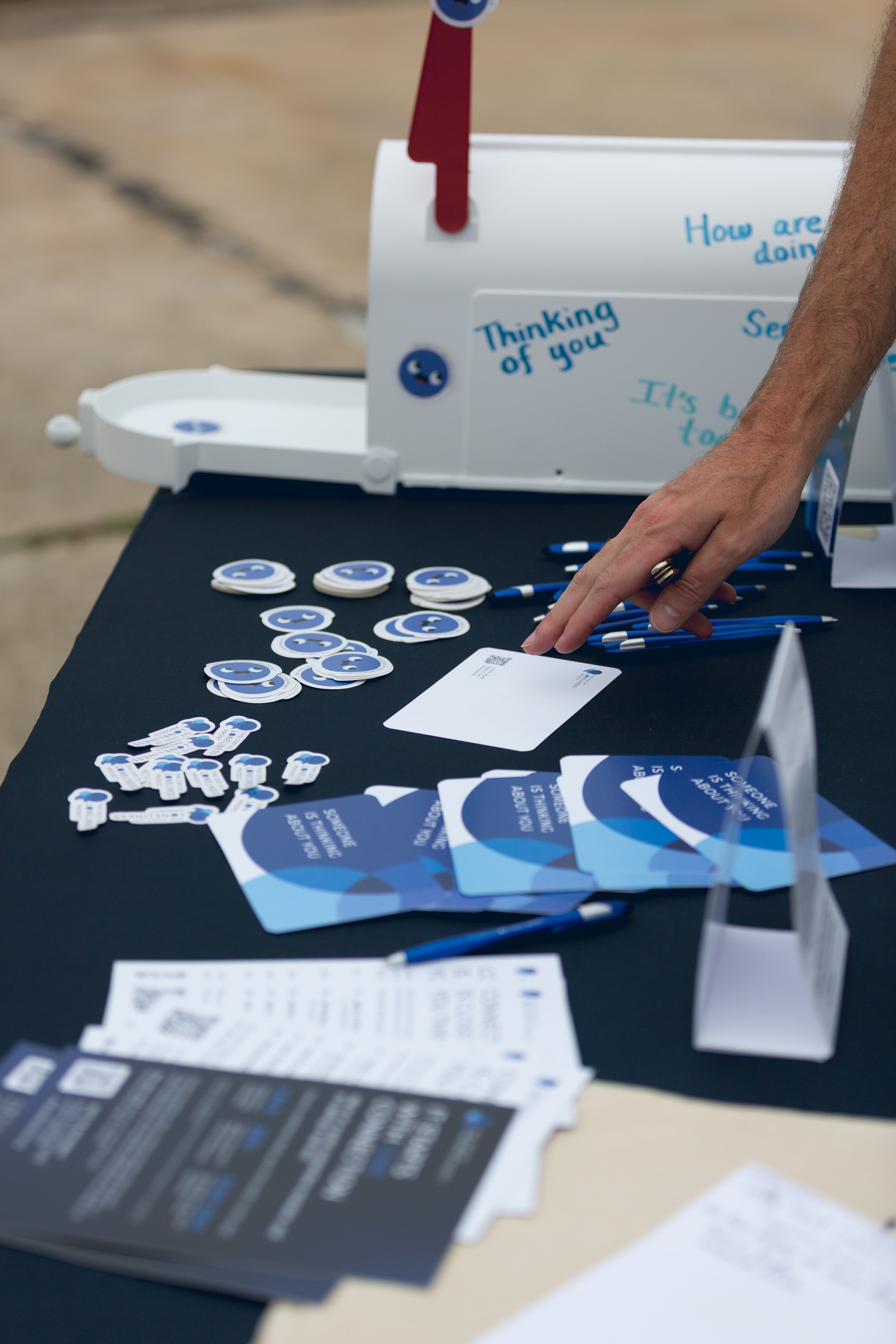
Friends and supporters I have known for a long time came out to see us. Some of them I had not seen in a while, and honestly, just reconnecting with people who matter to me would have made the mornings meaningful.
What happened in our space was something else entirely.
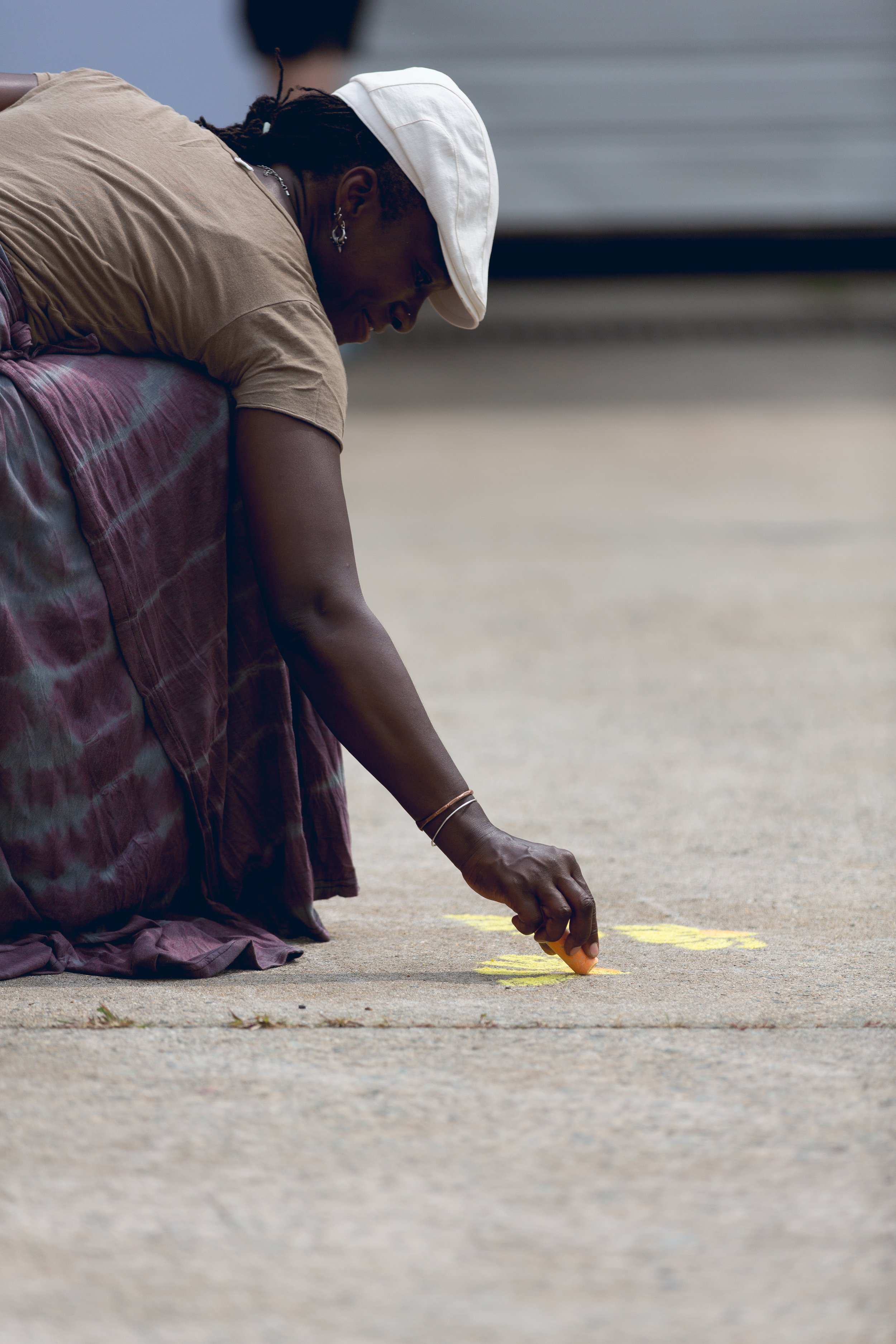
The space itself was simple. On the first weekend, Winston-Salem artist Micah Walker painted an ordinary dining chair into an original work of art in real time, so the piece grew while people watched. A blank canvas nearby asked people what makes them feel like they belong, and guests wrote their answers right there in the open, inspiring others as they went. Micah used their words as inspiration for the art.
At a postcard station, we gave people the chance to write to someone they had been thinking about. We provided the stamps and mailed the cards afterward. Children even wrote their own, and most of them wrote to grandparents.
And because we were not there to hand out pamphlets, we put out picnic tables, chairs, and free popsicles so people had a reason to sit down and stay a while. To have conversations. To meet new people. To feel connected.
The conversations began before we prompted them
I expected people to write postcards. I expected children to draw. What I will remember is the depth of the conversations.
People I did not know at all stood at that table in the middle of a busy market and told me about their own loneliness. Some of them cried. Many of them said some version of the same sentence: I don't know if I have ever said this out loud before.
One woman came by with her grown daughter and started telling me about her husband, who died a couple of years ago. She said nobody prepared her for what it would feel like.
She had braced for the grief. Nobody warned her about the quiet. The long stretches of a day with no one in the house. The realization somewhere along the way that this is the shape her life has now, and it may not change.
So she makes herself go out. She comes to the market. She puts herself around other people because she has learned what happens when she stays home.
A little later I talked with a woman who cares for her father. She was honest about how lonely that is. The hours, the responsibility, the way your own life narrows around someone else's needs. She is carrying an enormous weight, and like so many other caregivers, she often carries it quietly.
Then she told me about their Saturdays. The two of them come to Cobblestone every week. It is their ritual, and they both look forward to it.
One woman getting herself out of the house on purpose. Another woman and her father building something into their week they can count on. Both of them working to find their own sense of belonging.
None of these conversations required prompting. A stranger handed someone a postcard and a pen, and the door opened for connection. That tells you how much people are holding. It also tells you how few places they have to set it down.
I know this data as well as anyone. It still landed hard.
I spend so much of my life inside this subject. I read the studies. I talk with researchers and organizations. I have conversations about loneliness nearly every day.
I certainly know the scale of this. Those two mornings still hit me the way they did.
There is a difference between reading that one in two American adults experiences measurable loneliness and standing across from one of them at a card table while she tells you about her week. She is holding a bag of tomatoes. She is somebody's neighbor. She was in line behind you at the coffee stand ten minutes ago. She is in a market with hundreds of people, and she feels totally alone.
This happens to me at every one of these gatherings. I go in knowing the numbers. I come out carrying faces. That is why we keep showing up.
So many people asked how they could help
The second thing that happened over those weekends was that so many people, including those who told me about their own struggles with loneliness, asked how they can help.
Individuals wanted ideas for their own neighborhoods. Local organizations came by and asked about working together. So did people from area universities who watch this play out in their students every year.
They wanted a way to help, and the reassurance that other people were doing something too. A canvas, a stack of postcards, some chairs, and a few popsicles turned out to be invitation enough to make that happen.
That gives me so much hope that what we are doing at The Cost of Loneliness Project has the power to create a movement for change.
Belonging is already being built in ordinary places
Here is what I keep coming back to from those two Saturdays.
The infrastructure for belonging already exists in most communities. Markets, libraries, parks, rec leagues, front porches, church basements, the coffee shop where the staff knows your order. These places are doing quiet work every single week.
The widow who makes herself get out of the house found one. The daughter caring for her father found one. Neither of them was waiting for a program.
Our job is to find those places, support them, show up in them, and make room for the person standing next to us.
That is within reach for every one of us.
Movements begin in ordinary places
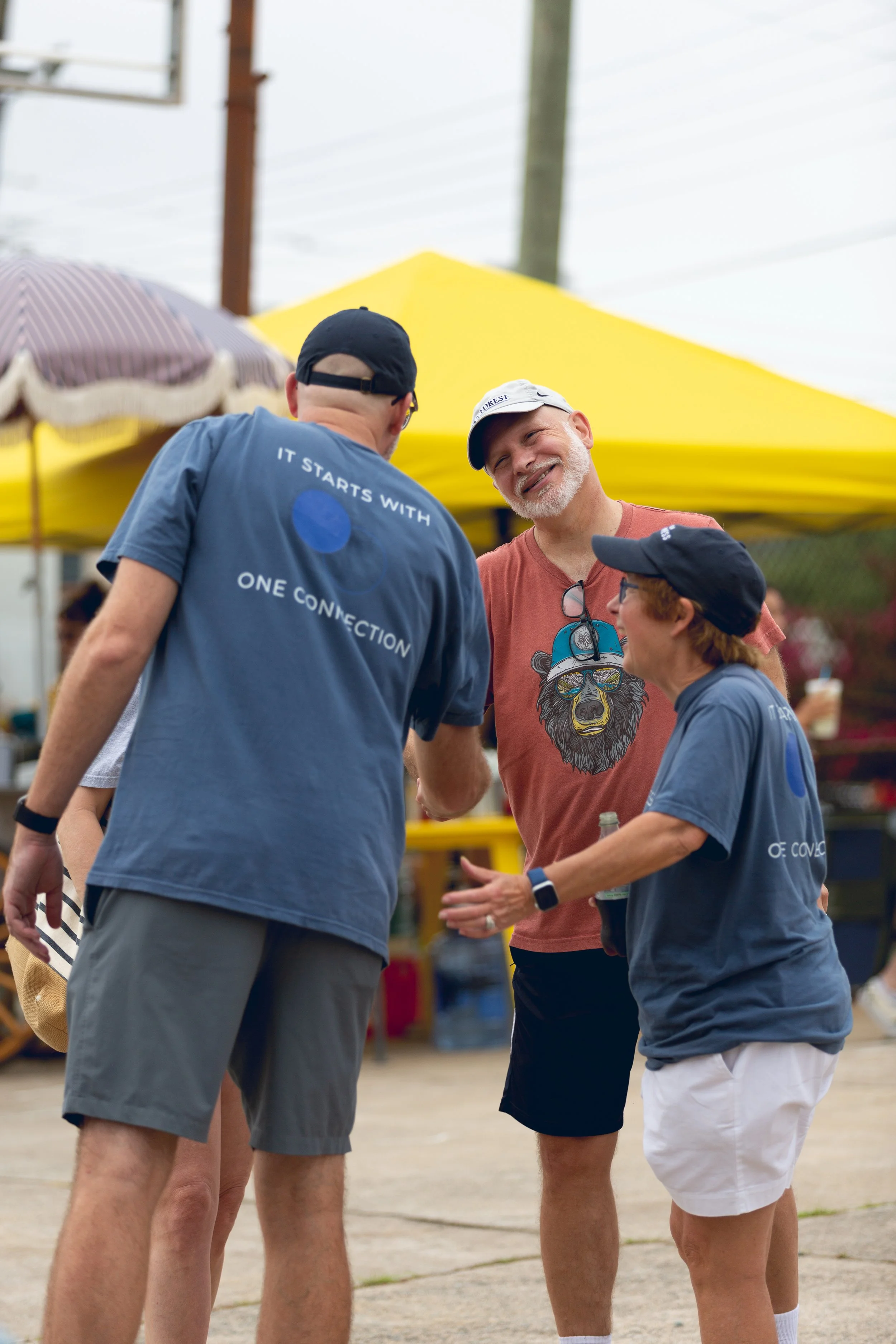
Over the coming months, we will travel across America gathering stories of connection, highlighting people and organizations making a difference, and inspiring others to act.
I would love for you to join us.
Follow The Cost of Loneliness Project on LinkedIn, visit our website, and join us across social media for stories, updates, and ways to participate. Save the date for November 12, the first National Day of Connection.
And in the meantime, reach out to someone. Make the call you have been meaning to make. Ask someone how they are really doing and stay for the answer. Talk openly about loneliness and belonging, because the more we say it out loud, the less anyone has to hide it.
Movements do not begin because one organization has all the answers. They begin because thousands of people decide they want to be part of the solution.
Thank you for being part of this one.
